

Cacao tea and warm muffins arrive at your bungalow door at first light, made by Hilda, our cook of 19 years. Some mornings the sky is clear and the bay below sits perfectly still. On others the trees are still dripping from rain that came through overnight, and the hill smells of wet earth and chocolate.
Both are ordinary mornings at La Loma Jungle Lodge, on a hill above Bahia Honda on the sheltered south side of Isla Bastimentos, fifteen to twenty minutes by our private boat from Bocas Town.
Every month here has its own appeal, including the green season in September and October, and the differences between them are smaller than most people expect.
Whichever month you pick, your bungalow opens onto the jungle and comes with a private bathroom and a hot shower fed by filtered rainwater. Most have a hammock and a covered terrace. Some look out over the bay, some sit up in the canopy, and two are down among the cacao trees.
Pick your month and your view. See the open-air bungalows.
The Best Time to Visit Bocas del Toro
How you like to travel decides your best time to visit Bocas del Toro, because the weather barely moves. Some people want the archipelago at its liveliest, with the boats full and the restaurants in Bocas Town humming. Others want the trails to themselves.
Bocas del Toro sits in the Köppen-Geiger Af zone, a tropical rainforest climate where all twelve months of the year carry heavy rainfall and about 2,735 mm falls over a year. Across that whole year the average temperature shifts by only 1.6°C, with daytime highs holding around 26 to 27°C, near enough to 80°F. The warm waters of the Caribbean hold steady too.
So the seasons you’ll see quoted for Bocas are travel seasons. High season lands in February and March because that’s the middle of winter in North America and Europe, and green season lands in September and October because that’s when those same travelers stay home.
What the Rain in Bocas del Toro Is Like

Rain in Bocas del Toro comes in short bursts and doesn’t settle in for a whole day. Your Bocas del Toro weather forecast will show thunderstorms on every day of your trip, and it shows the same thing all year, so it tells you very little about the week you’ll get. That’s why our own FAQs deal with it first.
Bocas del Toro’s rain falls on around 230 days of the year. It arrives heavy and warm and loud on a roof, and then it’s done, and the light comes back with the trees dripping and a breeze coming off the bay. You’ll get sunshine and rainfall year round, often inside the same hour. Bocas del Toro doesn’t have a dry season, and there’s no real Bocas del Toro rainy season either. Rain turns up in every month of the year.
Why Surfers Watch the Forecast
Wet weeks here usually bring good swell, which is why a soaking forecast is good news if you surf. You’ll see the surfers in Bocas Town after a wet week looking pleased with themselves.
Panama Sits Outside the Hurricane Belt
Atlantic hurricanes almost never reach Panama. Storms come within range around three times a year, and most turn north before landfall and leave wind and rain behind them. Only one has ever come ashore in Panama, Hurricane Martha in November 1969, and it had weakened to a tropical storm before it crossed the coast in Veraguas Province.
What High Season and Green Season Mean in Bocas del Toro
In the tropics, green season is usually shorthand for the rainy season. Here it’s shorthand for the quiet season, because the rain keeps no calendar. When we use either term, we’re describing how many travelers are in the archipelago, which follows the northern travel calendar.
|
Time of year |
What it’s called |
What changes |
|
December 15-April 15 |
High season |
The bungalows fill up soonest, so it’s worth booking early. Bocas Town is at its liveliest. |
|
September and October |
Green season |
Our lowest rates of the year, the widest choice of bungalow, and fewer crowds on the water and in town. |
|
The rest of the year |
In between |
Rates and availability sit between the two, from May and June through July and August. Boats, meals and guided trips run as normal. |
Busier is a matter of degree here. In February and March the boats carry more people, there’s more going on in town, and the bungalows fill up sooner. Even in the busiest weeks there are only ever seven units on the property, so the hill itself doesn’t feel crowded.
In the green season, our low season, the trails are emptier and the boats between the islands carry fewer people. The flights from Albrook in Panama City run daily all year. And the boats run all year too, so nothing here shuts for a season.
What a Wet Day Looks Like From Your Bungalow

Our bungalows are open to the jungle on the sides but roofed and screened, so even when it rains, you and your belongings stay dry. Rain drums on the roof for twenty minutes or so and then stops, and you’ll hear it coming up the hill through the canopy before you see it.
After a day with rain, the jungle is at its loudest, with the unmistakable sound of frogs. Strawberry poison dart frogs, small and bright red, are easiest to spot on the trails afterwards.
Two-toed and three-toed sloths both live on Bastimentos, and neither one’s in a hurry about the weather. White-faced capuchins and Panamanian night monkeys move through the canopy above the trails.
The farm tour and the bat cave both work when it’s raining. The cacao and permaculture farm tour comes with every stay, walking you through thousands of pesticide-free cacao trees and showing how the pods are fermented, dried and turned into chocolate.
The bat cave excursion means swimming into a cave system in Bahia Honda, so a little rain on the boat over changes nothing. Dru D, who stayed with her family in January 2026, singled out the red bat cave and the farm tour on TripAdvisor and said the excursions were worth the extra climbs.
Or you do none of it. A massage, a book, a hammock (most bungalows have one), and the afternoon goes by.
Every tour and massage is arranged here at the lodge, so you can look at the sky first and decide over dinner the night before. That’s how most guests do it.
Browse the guided excursions from the lodge.
Three Things to Time Your Trip Around
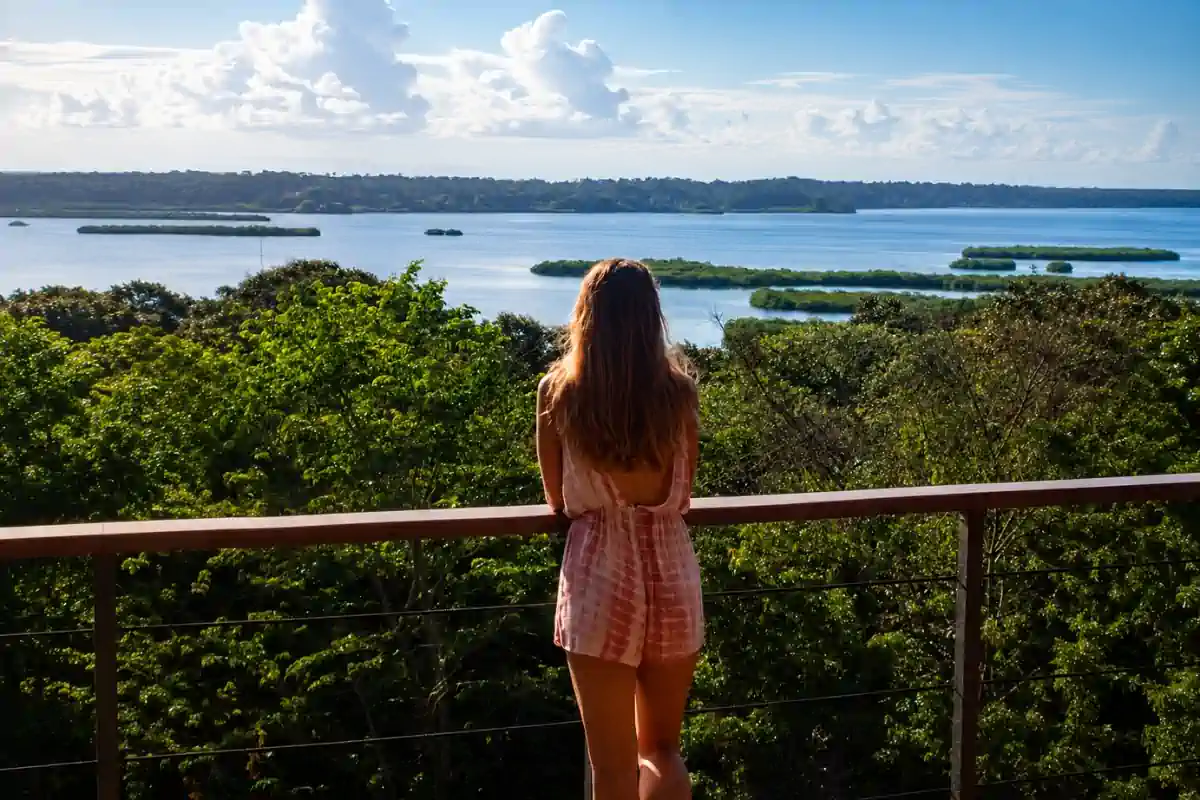
Three things at La Loma depend on your dates, and they’re all easy to check before you book.
- The moon, if you want to see bioluminescence. It’s here year round, produced by dinoflagellates, single-celled organisms that flash blue when the water moves, and on the boat it reads as a faint light around anything moving through the water.
Our bioluminescence tour runs on moonless nights, and the best conditions are a new moon with calm water and no wind, so look up where the new moon falls in the month you’re considering. It’s an evening cruise in the bay below the lodge and costs $35 a person.
-
- Swell, if you surf. There’s no fixed surf season here, so any month can turn on, and a surfer landing in a wet week may get the best of it. Conditions decide it, and they don’t follow the calendar.
- Swell, if you surf. There’s no fixed surf season here, so any month can turn on, and a surfer landing in a wet week may get the best of it. Conditions decide it, and they don’t follow the calendar.
- Our retreat calendar. Yoga teachers and wellness hosts bring groups here on set dates, and the upcoming retreats page lists what’s scheduled. If joining one appeals, that decides your month for you. And if you’d like the hill to yourselves, the same page shows which weeks are already taken.
How to Pick Your Month
The best months to visit Bocas del Toro come down to three practical things.
Budget. September and October carry our lowest rates of the year.
Company. Green season’s the quiet stretch. February and March are the liveliest, and they’ll ask you to book further ahead.
The water. Swell and flat seas come and go all year, so surfers, snorkelers and divers do best arranging things once they’re on the island.
But beyond that, the right month is the one you can get away for.
What to Pack for Bocas del Toro

You’ll get hot and humid days with a rain shower or two in them, so quick-dry layers and a light rain shell do most of the work. Cotton holds water inside the fiber and takes a long time to dry in this humidity, so you’re better off in synthetics or merino.
And bring shoes with grip. La Loma is one of the highest hills in Bocas del Toro at just under 70 meters, and the paths between the bungalows and the restaurant climb steeply in places. Swimwear, a sun hat and insect repellent cover the rest, and every bungalow has mosquito nets.
Leave the laptop. There’s WiFi at the restaurant and dining pavilion and none in the bungalows, and guests tell us that’s their favorite part!
If you visit Panama City first and come out to the Caribbean side afterwards, the flight into Isla Colon takes about an hour. Our boat then leaves Bocas Town at 4pm, which is the one fixed point in how to get to Bocas del Toro, so give yourself flights that land with time to spare.
Your stay includes three meals a day grown mostly on the farm, the boat over, the cacao and permaculture farm tour, the trails, the rock pools and the kayaks.
Green season rates are our lowest of the year. Check dates and book direct.
Frequently Asked Questions
How many days should you spend in Bocas del Toro?
Three to five nights suits most people in Bocas del Toro. That’s enough for the farm tour, a guided excursion or two, and at least one day you don’t plan. Any shorter and you’ll spend more of the trip traveling than you’d like.
What is the weather in Bocas del Toro like month to month?
Bocas del Toro weather is warm and wet every month. The archipelago has a tropical rainforest climate, so rainfall stays heavy all year and temperatures hold close to constant. Published monthly rainfall figures for the archipelago vary widely between sources, some of them drawing on weather stations inland at altitude, so treat any month-by-month table you find with caution when you’re choosing the best time of year to visit Bocas del Toro.
Which island is best to stay on in Bocas del Toro?
That depends on what you’ve come to Bocas for. You’ll find the airport, Bocas Town, the restaurants and the nightlife on Isla Colon, along with the boat departures for spots like Starfish Beach. Isla Bastimentos is quieter and greener, with no roads anywhere on it, one small town at Old Bank and jungle through the interior. La Loma is on Bastimentos, reached by boat.
When is the best time to visit Bocas del Toro for surfing or scuba?
Surf and flat water in Bocas come and go through the year, not by month. The wet weeks often carry the swell, so a soaking forecast tends to suit surfers, and the calmer days that suit scuba and snorkeling turn up throughout the year. Both get arranged after you land, so you’re free to move with the conditions.
Does Panama get hurricanes?
Panama almost never gets hurricanes. It sits far enough south that they rarely form nearby, and storms tracking toward the Caribbean coast usually turn north before they reach it. Only one storm on record has made landfall in the country, and it had weakened to a tropical storm first. Atlantic hurricane season runs from early June to late November, and what reaches Bocas from those storms is wind and rain.
Is it safe to swim in Bocas del Toro?
Yes, swimming is part of most days in Bocas, in the bay, at the beaches reached by boat and in the natural rock pools on the property. Calm seas come and go by spot and by swell, so ask our staff which beach suits the day. Bottlenose dolphins visit the bay regularly, and reef fish including angelfish, wrasses and groupers turn up when you snorkel.
Is Bocas del Toro worth visiting?
Bocas del Toro is worth visiting if you want jungle and water more than a resort strip. This is a working archipelago on the Caribbean Sea with an indigenous Ngäbe population, a marine park and islands you move between by boat. At La Loma, our cooks Hilda and Jana have been here 19 and 15 years, and the lodge supports scholarships and school infrastructure through Education is Power, and year-round community programs through Give and Surf.


