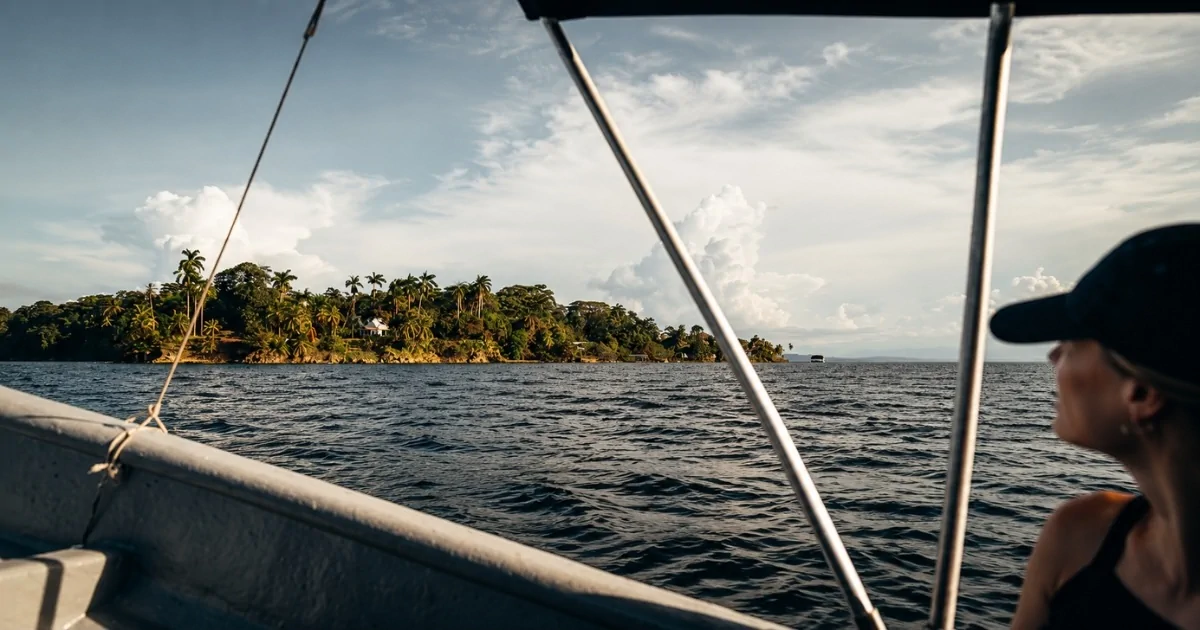
Isla Bastimentos is the largest island in the Bocas del Toro archipelago and the least developed, a 52-square-kilometer landmass where most of the interior is protected national marine park, no roads cross the jungle, and the dominant sound at night is the rainforest. It sits ten minutes by boat from Bocas Town and feels like a different world entirely.
Most people who visit Bocas del Toro spend their first day on Isla Colón, walk around Bocas Town, find a tour, and eventually make it to Bastimentos for a few hours: Red Frog Beach, maybe a snorkel off the Cayos Zapatilla, back on the water taxi by 4pm. But those who only visit for a day miss out on the side of Bastimentos that only reveals itself if you stay a few nights.
This guide covers everything you need to know about Isla Bastimentos before you arrive: the geography, the national marine park, the beaches on the north shore, the Afro-Caribbean town of Old Bank, and the quiet southern bay where La Loma Jungle Lodge sits above Bahia Honda. Three days here, planned well, is enough to see what makes this island unlike anywhere else in Bocas del Toro.
The Geography of Isla Bastimentos
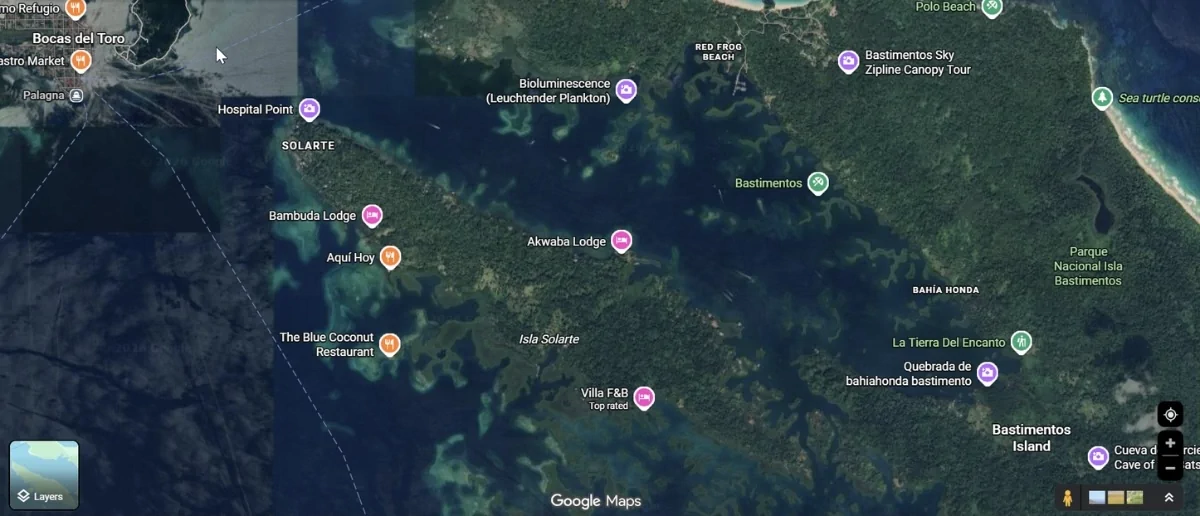
Isla Bastimentos runs roughly east to west, about 16 kilometers long, and sits parallel to Isla Colón across a channel that most water taxis cross in under ten minutes. What the transit time conceals is how different the two islands are. Isla Colón is the hub: Bocas Town, the airport, most of the restaurants, the nightlife, the crowds. Isla Bastimentos has one town, wooden houses on stilts, and footpaths instead of roads. There are no cars and no roads that cross it. The interior is essentially unbroken jungle.
Bastimentos itself splits into two very different coastlines. The north-facing side takes the full force of the Caribbean, with wide beaches backed by forest and nesting grounds that draw four species of sea turtle every year. The south-facing side looks toward the protected waters of Almirante Bay and is sheltered, calm, and mangrove-lined, and this is where the bays are quiet enough to see bioluminescence on moonless nights, and where La Loma sits above Bahia Honda.
Bastimentos Island National Marine Park: What It Protects
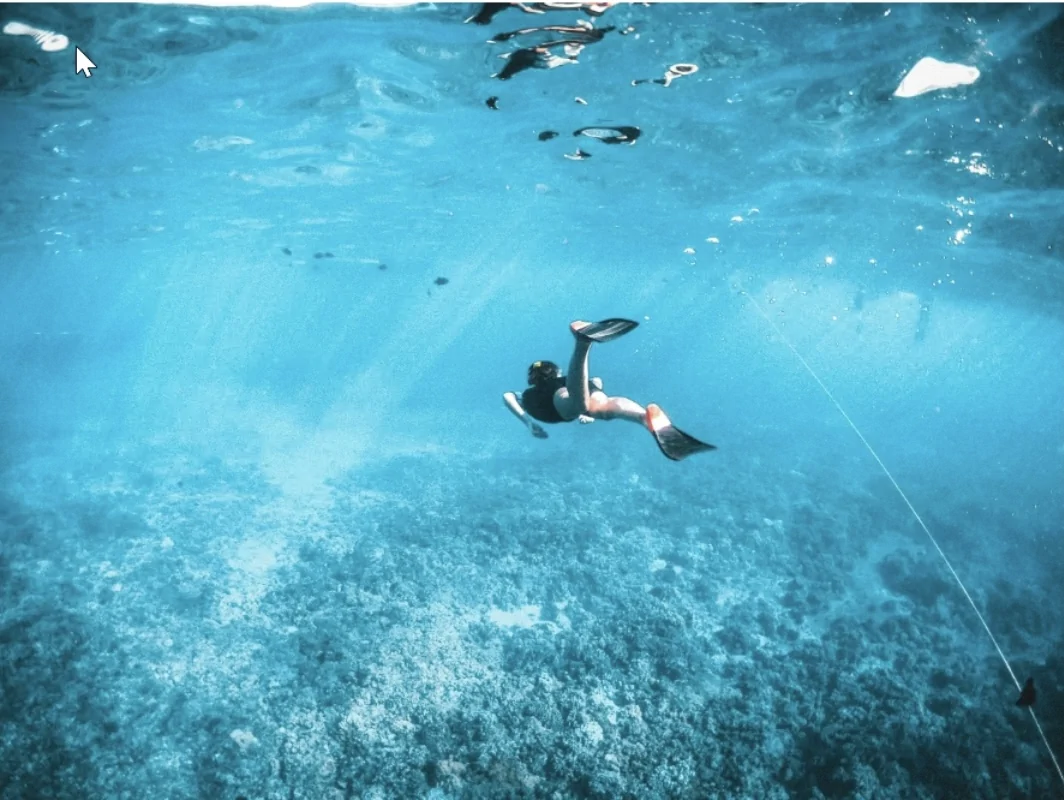
Bastimentos Island National Marine Park was established in 1988, making it Panama’s first marine protected area. It covers 132.3 square kilometers across four distinct ecosystems: the beaches and forests of the north shore, the island’s interior rainforest and wetlands, the Cayos Zapatilla and their coral gardens, and the mangrove channels and seagrass beds on the south side.
The Cayos Zapatilla, two small islands at the southeastern edge of the park, are where most visitors come to snorkel. The reef here holds nearly 80 coral species, some believed to be over 10,000 years old, and the surrounding waters hold more than 250 species of fish. La Loma runs a full-day Zapatilla Islands tour from Bahia Honda that takes in mangrove channels, starfish shallows, and open-water snorkeling off the cays.
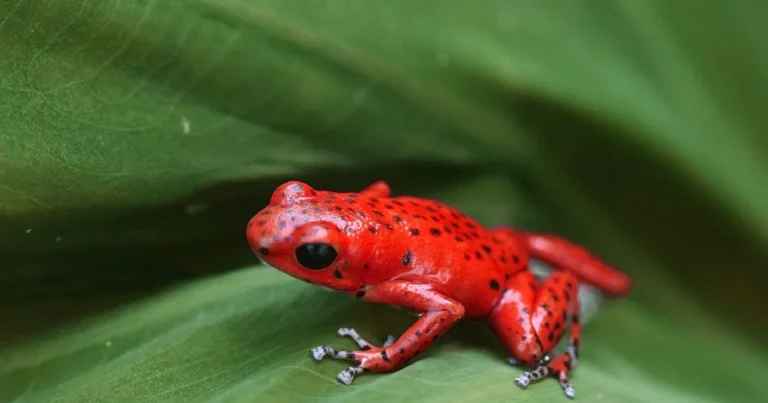
The terrestrial section of the park protects 28 species of amphibians and reptiles, 17 of which are threatened or endangered. The most-cited residents are the strawberry poison dart frog, along with white-faced capuchin monkeys, three-toed and two-toed sloths, and an estimated 68 species of birds. In the freshwater lagoon in the island’s interior, spectacled caimans share the water with freshwater turtles.
And then there are the sea turtles. Four species nest on Bastimentos between April and October: leatherback, hawksbill, green, and loggerhead. The Sea Turtle Conservancy, which has monitored nesting beaches here since 2003, tracks most of that activity to Playa Larga on the north shore, a 5.6-kilometer beach with no facilities and, most days, no other visitors. A trail from the Ngäbe-Buglé village of Salt Creek leads through dense jungle to the beach, one of the better hikes in the archipelago and notably quiet at the far end.
The Beaches: Red Frog Beach, Wizard Beach, and the North Shore
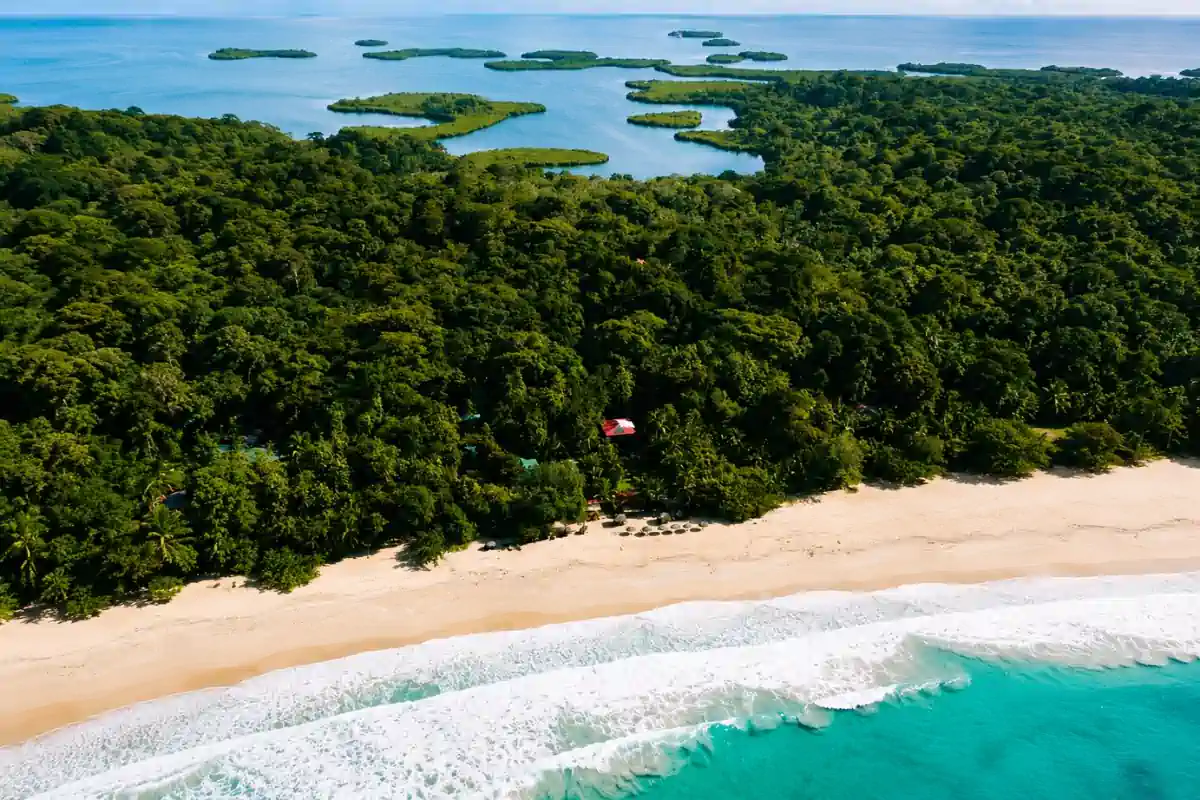
The beaches on Bastimentos are on the north side of the island, facing out to the open Caribbean. The three most visited are Wizard Beach (Playa Primera), Red Frog Beach, and Polo Beach, each reachable by different combinations of trail and boat.
Wizard Beach is accessible by foot from Old Bank in about 20 minutes on a trail through jungle. It’s wide, backed by forest, and usually quiet, because the walk filters out anyone who isn’t willing to get their shoes muddy. The waves can be strong; swimming is possible but requires reading the conditions.
Red Frog Beach is reached by water taxi to a dock on the south side of the island, followed by a 10-minute walk. There’s a beach club with a bar and pool, and the beach itself is named for the strawberry poison dart frog (Oophaga pumilio) living in the forest behind it. These are small, vivid red frogs. Look near the roots of trees and fallen leaves, not in the open. Don’t touch them; the toxins are real. Red Frog Beach has the most amenities of any beach on the island and, accordingly, the most people.
Polo Beach is the least-visited and arguably the most rewarding, nearly a mile of sand with a coral reef you can snorkel from the shore, reachable by a hike through the national park.
One thing all three beaches share: riptides and currents that can come up without warning. Watch the flags where they’re posted and pay attention to the water before going in. The north shore of Bastimentos is not a calm swimming beach the way a bay is.
The south side of the island tells a different story. Bahia Honda, the smaller coves, the mangrove channels: sheltered, warm, navigable by kayak, and largely untouched by the day-tripper traffic that moves through the north shore beaches every afternoon.
Old Bank: The Town
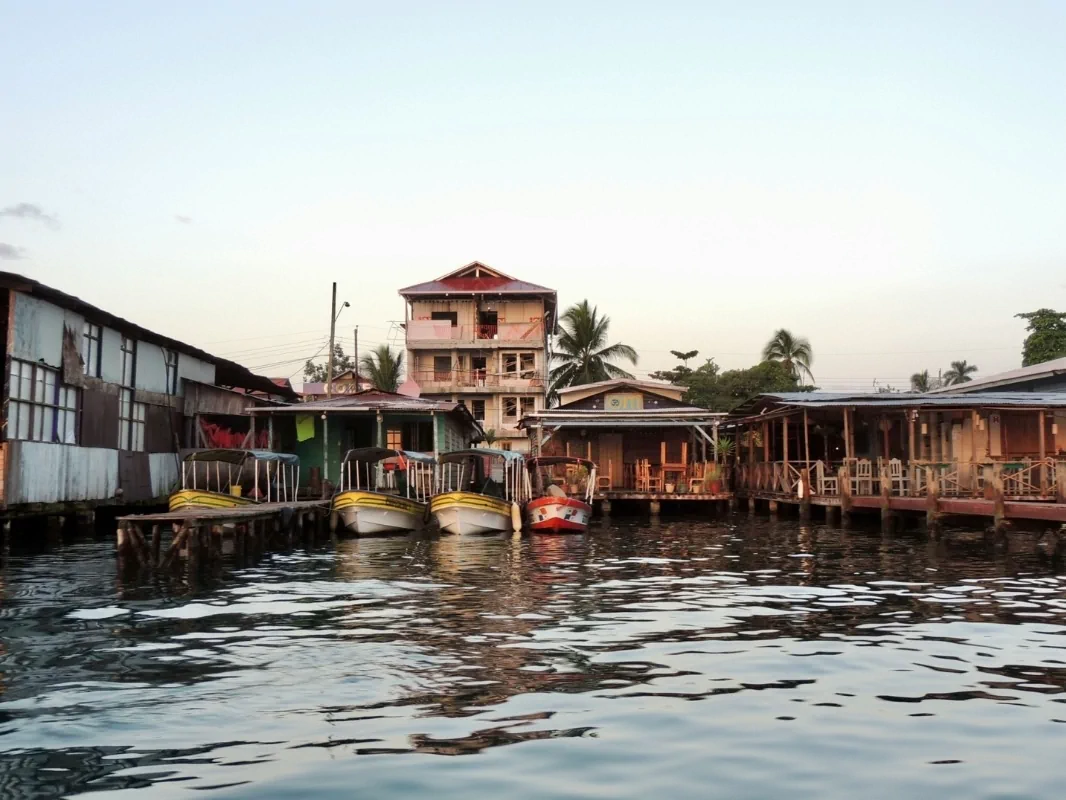
Old Bank sits on the western tip of Isla Bastimentos and is the second-largest community in the Bocas del Toro archipelago after Bocas Town, though the comparison flatters neither place: Old Bank has a few hundred people, a handful of restaurants, a bar or two, and no bank. What it has is character.
The Afro-Caribbean town of Old Bank descends from workers who came to Bocas del Toro during the banana boom of the late 19th and early 20th century. Guari-Guari, a local Creole dialect rooted in English, is the first language for many residents. The houses are painted in Caribbean colors, often on stilts over the water, and the waterfront doesn’t look like a tourist strip. It looks like a place where people live. From Old Bank you can walk to Wizard Beach, catch a water taxi to Red Frog Marina, or hire a boat for the day.
On the eastern end of the island, near the national park, is the Ngäbe-Buglé community of Salt Creek (Quebrada de Sal). This is the entry point for the trail to Playa Larga and the sea turtle nesting beaches, and the community manages the trail access. Any guided hike to that side of the island should be arranged through or with local guides from Salt Creek, not only because it’s the respectful approach, but because it’s the more knowledgeable one.
La Loma also offers a hike to Long Beach starting from Bahia Honda through the interior of the island.
Bahia Honda and La Loma: The Southern Bay
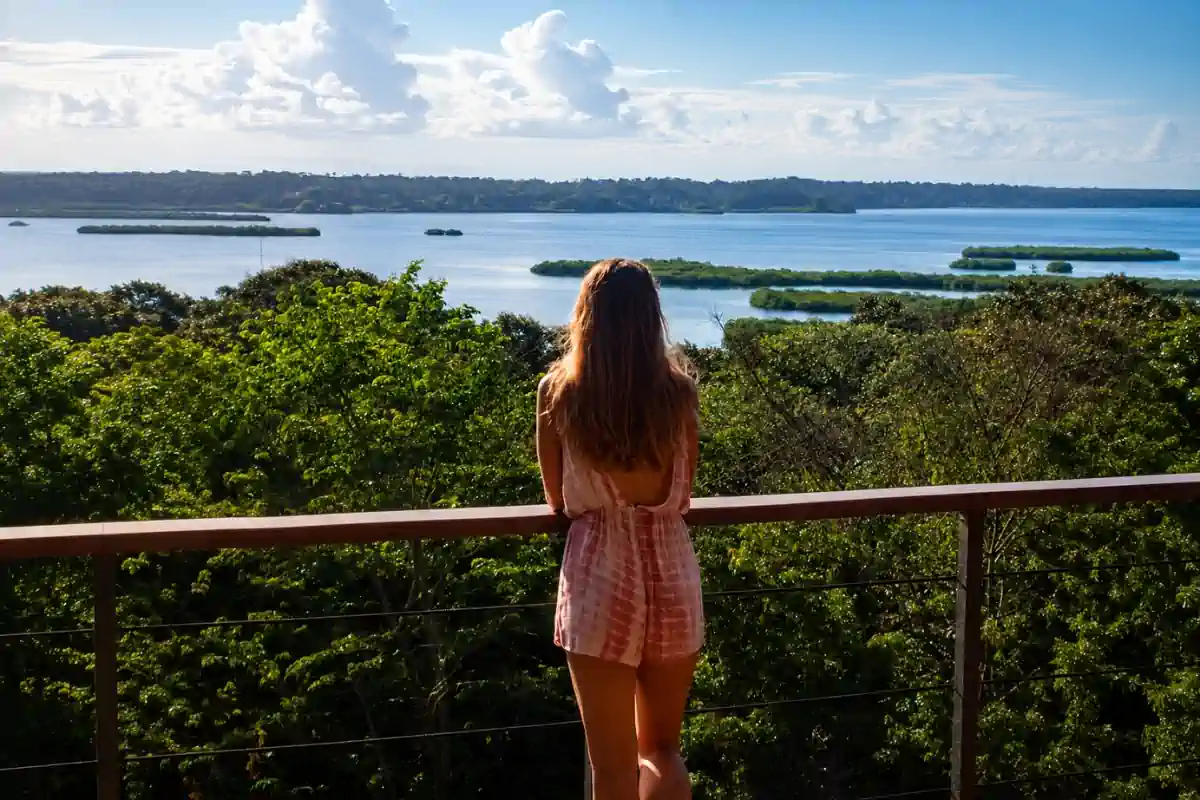
On the south side of Bastimentos, Bahia Honda is a sheltered bay lined with mangroves and accessible by boat from Bocas Town in about 15 minutes. The Ngäbe-Buglé community of Bahia Honda sits on the bay, a small indigenous community that has maintained a continuous presence here far longer than any tourist infrastructure.
La Loma Jungle Lodge is the only lodge on the island with a working cacao and permaculture farm on site. The seven bungalows are open-air, reached by jungle steps, and positioned at different elevations through the canopy, and the views from the upper bungalows take in the bay below and the surrounding forest. Guests arrive by private boat from Bocas Docks in Bocas Town at 4pm, and there are no roads, no check-in desk, and no lobby.
La Loma’s guided tours cover most of what Bastimentos offers: the bat cave, a boat trip through mangrove channels into the Bahia Honda cave system and one of the most consistently recommended excursions in Bocas; the Zapatilla Islands day tour, which takes in mangrove channels, starfish shallows, and snorkeling off the Cayos Zapatilla; the long beach hike through the national park; birdwatching; wildlife boat tours; and the bioluminescence tour that runs on moonless nights from the property’s dock. The cacao and permaculture farm tour is included with every stay, two hours walking through thousands of pesticide-free cacao trees with guides from the Bahia Honda community.
What Kind of Traveler Bastimentos Is For
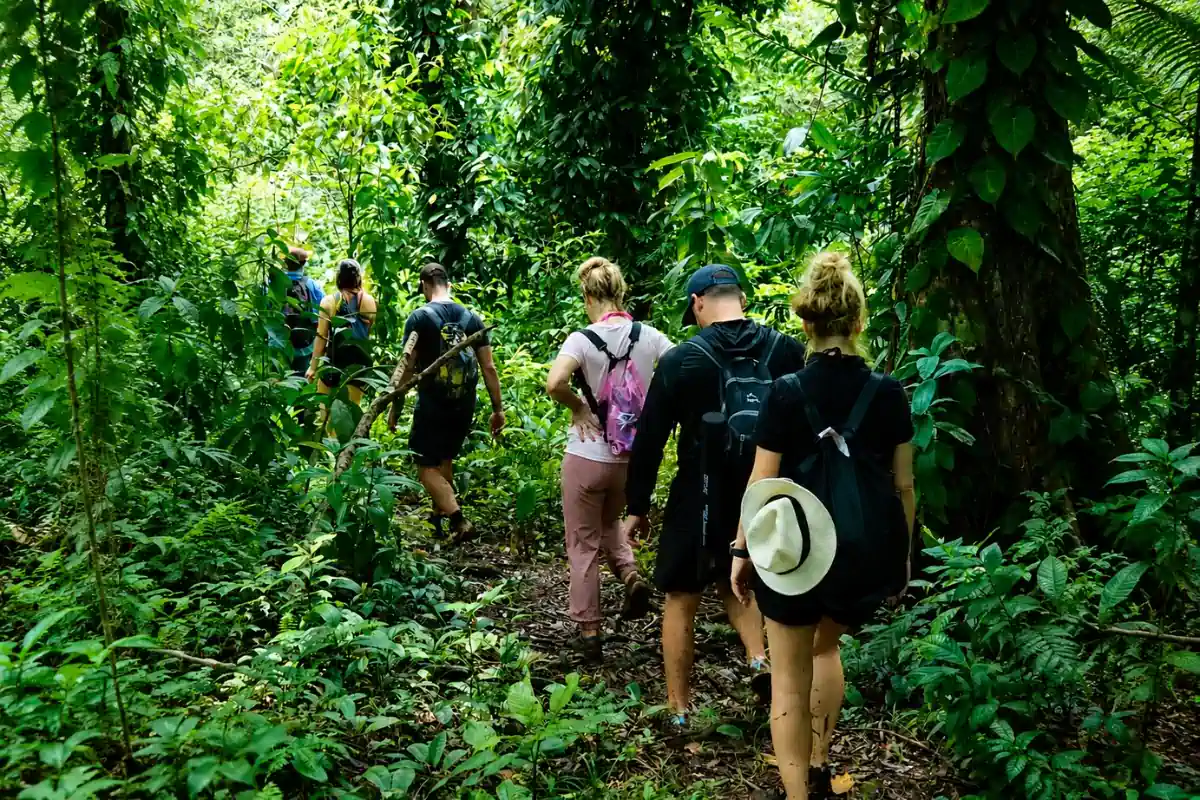
For travelers who want to be inside nature rather than next to it, Bastimentos delivers that completely. The island is large enough that most of it stays wild, quiet, and genuinely remote, a 52-square-kilometer landmass where the national marine park covers most of the interior and the beaches on the north shore see a fraction of the traffic you’d find anywhere on Isla Colón. The bays on the south side are quieter still, and the jungle interior has essentially no one in it at all.
What that means in practice is a particular kind of day. You wake up to sounds of the rainforest before your alarm would have gone off. You eat breakfast made from food grown 50 meters away. You spend a morning on a beach where the only footprints in the sand are yours and whoever came with you. In the evening, if the moon is new and the water is still, you watch the bay turn blue.
That rhythm, unhurried, immersive, and genuinely disconnected from the noise of everyday life, is what draws people to Bastimentos specifically rather than the rest of the archipelago. It’s not an accident. The water taxi, the lack of roads, the limited amenities, these are the things that keep the island the way it is, and for the travelers who come here for exactly that reason, they wouldn’t change a thing.
If that’s the kind of trip you’re planning, there’s nowhere better in Bocas del Toro to find it.
Getting to Isla Bastimentos
Getting to Bastimentos from Bocas Town is a water taxi, roughly 10 minutes and $3–5 per person to Old Bank. Taxis run throughout the day and into the evening, though frequency drops after dark. Agree on the price before boarding.
For guests arriving at La Loma, the lodge coordinates a private boat transfer from Bocas Docks in Bocas Town at 4pm. This is a coordinated departure, not the public water taxi system, and logistics are handled directly with the property via WhatsApp (+507 6517-4718) when booking.
To reach Bocas Town from Panama City, the standard route is a domestic flight from Albrook Airport (PAC) to Bocas del Toro International Airport (BOC), about an hour, on Air Panama or FlyTrip, both booked directly through their own websites. Full logistics are covered in La Loma’s Getting Here guide.
Where to Stay on Isla Bastimentos
La Loma Jungle Lodge is the only lodge on the island with a working cacao and permaculture farm on site. Every stay includes three daily meals, round-trip boat transfer from Bocas Town, and the cacao and permaculture farm tour, with seven open-air bungalows set at different elevations through the canopy.
View bungalows and check availability at La Loma →
Frequently Asked Questions
What is Isla Bastimentos known for?
Isla Bastimentos is the largest island in Panama’s Bocas del Toro archipelago, known for its undeveloped rainforest interior, Bastimentos Island National Marine Park, Red Frog Beach, Wizard Beach, four species of nesting sea turtles, and the strawberry poison dart frog. It’s the least developed of the main Bocas islands, with no roads and one small town, Old Bank.
How do you get to Isla Bastimentos?
Water taxis run from Bocas Town on Isla Colón to Isla Bastimentos throughout the day. The crossing takes about 10 minutes and costs $3–5 per person to Old Bank. Guests staying at La Loma Jungle Lodge are met by a private boat that departs from Bocas Docks in Bocas Town at 4pm. Full travel directions are on La Loma’s Getting Here page.
Is Isla Bastimentos better than Isla Colón?
They serve different purposes. Isla Colón has the airport, most restaurants, nightlife, and easy access to day tours. Isla Bastimentos is quieter, more natural, and less developed, and it’s the better choice for travelers who want rainforest immersion, wildlife, uncrowded beaches, and an experience that doesn’t feel like a resort town. Neither is objectively better. It depends on what kind of trip you’re after.
What is Parque Nacional Marino Isla Bastimentos in Panama?
Bastimentos Island National Marine Park is Panama’s first marine protected area, established in 1988. It covers 132.3 square kilometers across Isla Bastimentos and surrounding waters, protecting coral reefs, mangroves, tropical rainforest, and the nesting beaches of four endangered sea turtle species. The park’s marine area hosts nearly 80 coral species and more than 250 species of fish, and the Cayos Zapatilla are the main snorkeling destination within the park.
What wildlife can you see on Isla Bastimentos?
Isla Bastimentos is home to white-faced capuchin monkeys, three-toed and two-toed sloths, strawberry poison dart frogs, over 68 species of birds, four species of sea turtles (leatherback, hawksbill, green, and loggerhead), caimans, and dolphins in the surrounding waters. Wildlife density is higher than on Isla Colón because most of the island is protected national park. La Loma’s wildlife and birdwatching tours cover the property trails and surrounding bay.
Where is La Loma Jungle Lodge on Isla Bastimentos?
La Loma Jungle Lodge is on the south side of Isla Bastimentos, on the hillside above Bahia Honda bay, a sheltered bay accessible by private boat from Bocas Town. The lodge sits within a 55-acre private rainforest and cacao farm reserve, next to the Ngäbe-Buglé community of Bahia Honda.